Showing posts with label Recipes: Russian and Eastern European food. Show all posts

Friday, May 3, 2013

Kulichi (Russian Easter cakes)

IMG_0006

I rarely go into baking yeast cakes or bread, but sometimes there is definitely room for that in life. Exactly like I do enjoy making my own cakes for Christmas, some years I do like baking my own kulichi for Easter. They are not really labor intensive, but they certainly are time consuming. However there are times when spending a thoughtless half a day around the kitchen making something homey the same as times and times before feels just right. Especially given that proper home made kulichi are incredibly good. None of the bought counterparts will ever get close to them.


In essence kulichi are yeast fruit cakes. What makes them special is their richness - I mean LOTS of butter. They turn out very soft, airy and crumbling. So they are wonderful together with pascha - traditional cheesecake we also make for Easter. However it is not at all necessary. You can easily serve them just with tea or add some plain cream cheese on the side.

I really like adding good vanilla and lemon zest to the dough. So do I like soaking the fruits in rum or brandy. Both are perhaps not traditional, but do add a lot to the flavor. Making kulichi does take some time just because yeast dough needs to rise a couple of times before you bake it. But there is nothing really complicated about the process.

Kulichi (Russian Easter cakes)

makes 4 cakes (around 400 g each)

Kulichi dough:
400 g all purpose flour
125 ml of milk
180 g sugar
10 g (1 packet) of rapid rise yeast
2 egg yolks
1/4 teaspoon salt
zest of one lemon
1 teaspoon vanilla
250 g butter, softened
180 g mixed fruit (some combination of raisins, sultanas, candied cherries, currants, apricots, pineapple and citrus peel)
50 ml rum or brandy

Icing:
200 g icing sugar
juice of 1 - 2 lemons

Soak the fruit in rum or brandy and set aside.

Heat the milk till it's a little warmer then your finger.

Mix half of the milk with yeast and a teaspoon of sugar, cover and leave for 15 minutes. The yeast should start bubbling. Do not skip this step even if your yeast package instructions say you should mix the yeast straight into the flour. As the dough is very rich the yeast needs a little help to activate here.

Combine the rest of the milk with all the remaining sugar, egg yolks, salt, lemon zest and vanilla and stir till most of the sugar dissolves.

Place the flour in a medium bowl. Add the milk mixture and the yeast mixture. By hand or using a dough hook stir everything together until you get even dough.

Knead the dough for 10 minutes by hand or for 5 minutes with a dough hook of electric mixer. Do not skip this step. It is needed to make sure kulichi do not go stale too early.

Cover the dough and let it stand in a warm place till it doubles in size. It should take 30 - 45 minutes. If it's not very warm at your home, use your oven heated to 30C.

Once the dough has risen, add the fruits together with rum or brandy and softened butter. Mix all together. It's much better to use a dough hook of electric mixer here, doing it by hand really takes a lot of effort.

Pans we use for baking kulichi are mug-shaped (tall, cylindrical, approximately 400 ml in volume) - the recipe is enough for four of these. If you can't get them, just use two 9 inch loaf pans lined with baking paper. Or use a muffin pan (small kulichi are very cute too), lined with paper muffin cups.

Fill your pans with dough to 1/3 of their height (not more, the dough will rise a lot). Cover with a towel or cling film and let stand in a warm place till the dough doubles in size.

Preheat the oven to 160C. Once the dough has risen, place kulichi in the oven. If your shapes are around 400 ml each, baking will take around 50 minutes. For a loaf pan it can take longer. For muffin cups it will take around 30 minutes. In any case it is safer to cover the kulichi with foil or baking paper 20 minutes after you start baking to prevent them from burning on the top.

Kulichi are ready when they are dark brown on top and a wooden stick inserted deep in the middle of the cake comes out clean and dry. Take them out of the oven and let cool down in their shapes on a rack.

Once kulichi are cool, take them out of their shapes and decorate them. To make the icing, place the icing sugar in a small bowl. Add enough lemon juice to get thick and creamy paste. Spoon the paste on the kulichi to cover the top. Let the icing set for 15 - 20 minutes.

Serve the kulichi with tea. Pascha cheesecake or plain cream cheese are wonderful complements to them.

Related:

Pascha (Russian Easter cheesecake)
Schneken (German sticky cinnamon buns)
Kovrizhka, grandma's spice cake (vegan version)
Christmas Black cake (Rum cake)

Thursday, May 2, 2013

Pascha (Russian Easter cheesecake)

IMG_0022

This coming Sunday everybody in Moscow is going to celebrate Easter. I was never religious, but Easter for me is a good old family tradition. And above all it's about food. I do not go into egg decorating affair, which is popular around here, but I have to have kulichi and pascha. Kulichi are special yeast fruit cakes and pascha is a kind of dense cold cheesecake. Together they produce a wonderful festive breakfast. Pascha tastes very fresh and complements the warm soft cake as a delicious spread. I do not bake my own kulichi every year, but pascha I always make myself. I do think it deserves to be made more often than once a year. It only takes half an hour but tastes really special.

Thursday, June 21, 2012

Sweet vareniki (Ukrainian dumpling) with cherries or with cottage cheese

IMG_4712

We came back from Kiev right when the fresh cherries started actively selling at our nearby market. So we made our beloved vareniki with cherries, that we didn't do for many years. In the process the venture extended to also include cottage cheese vareniki. I'll never be able to tell which one of these two sweet vareniki versions is better. It is not like with savory vareniki, where mashed potato is my absolute first choice.

Thursday, May 31, 2012

Making Ukrainian borsch

IMG_4377

A bit weird that I'm writing this 1.5 years since I started blogging as this could well be the first post. This particular borsch is something women in our family make for no less than four generations. There are as many right recipes for borsch as there are families living in Eastern Europe and this is our recipe. We always make it vegetarian and we use no stock whatsoever, but you will be surprised how much flavor this amazing soup has. Especially now, when the newly harvested vegetables are at last available, shiny and irresistible.

Tuesday, May 29, 2012

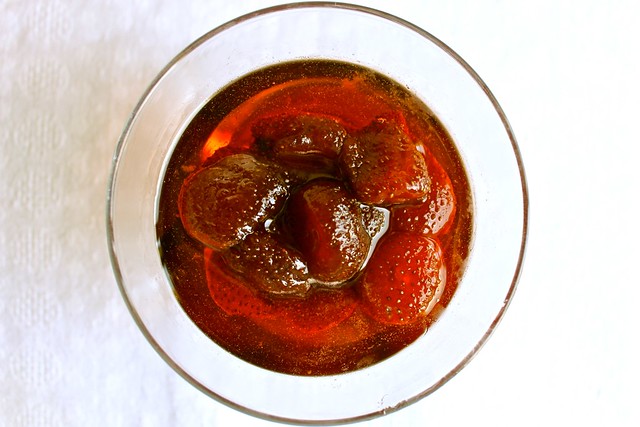
Home made strawberry jam (varenie)


For the second week already Moscow markets are full of strawberries. These are the first summer strawberries from Krasnodar region. Farmers are saying that this year they had record +35C temperatures in May and the strawberries came very early. They smell of summer and of my childhood. I just finished making the first portion (around 4 kg) of jam (varenie) and it feels like it is just the beginning.

Thursday, March 8, 2012

Potato zrazy with mushrooms

IMG_2915

These potato zrazy are another take from my grand grandmother's collection. I make them really rarely, because it is time consuming. Something has to force me and this time it was a Russian / Ukrainian cooking class I was preparing to give to a group of German ladies. My granny stuffed the zrazy with minced meat, but I prefer mushrooms especially given that it is Lent now.

Wednesday, February 15, 2012

Kovrizhka, grandma's spice cake (vegan version)


I was thinking about the menu for a Russian food cooking class and this kovrizhka came to mind. Kovrizhka is a kind of spice cake, baked in Russia and Ukraine, which I loved to make when I was in my teens. Since then I somehow forgot about it, which is unjustified given how tasty and simple it is. It fit really well into the class menu, so I went to search for the recipe.

Monday, January 23, 2012

Lazy vareniki (cottage cheese gnocchi)

IMG_2102 

Just in case you were looking for a recipe to turn your kitchen into a real mess, I've got one for you. Trust me. It works. Lazy veryniki come out great from your very first attempt. They make an amazing breakfast, lunch or snack or even dinner. We kept making them for as long for as I remember myself. However, though I normally succeed in cooking clean, lazy veryniki always leave me with a mess at the kitchen. If you solve this - my respect.

Saturday, December 31, 2011

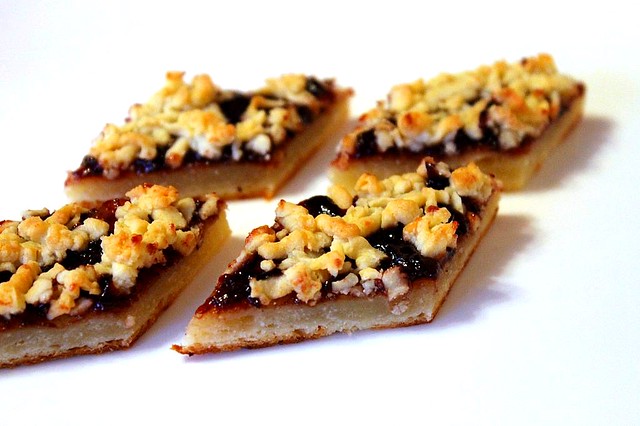
Blackcurrant cheese cookies


Today is the last day of the year. If I only knew how each of you is going to spend it I would perhaps get enough celebrating ideas for my whole life. As you can imagine I'm spending it at home, slowly preparing a New Year dinner, decorating a christmas tree, watching old movies and smiling to my lovely family.

If you are also in the mood for home cooking, let me show you these cookies. They are so simple and so tasty that it is hard to find a better fit for such a day. Have a bite and let a miracle happen to you. I believe they do happen if you let them do so. But whatever you believe, be happy tonight.

Tuesday, December 27, 2011

Cottage cheese and apricot cookie rolls


Did I say already that in Russia we do not celebrate anything on December 25-26th and all the important things happen on December 31st? The thing is that we actually keep baking Christmas cookies even longer - till January 10th or so because that's our favorite home activity on New Year's eve vacation. From all the cookies we bake these are the oldest. While some other cookies come and go these stay with us since (hard to believe...) 1991.

Wednesday, December 14, 2011

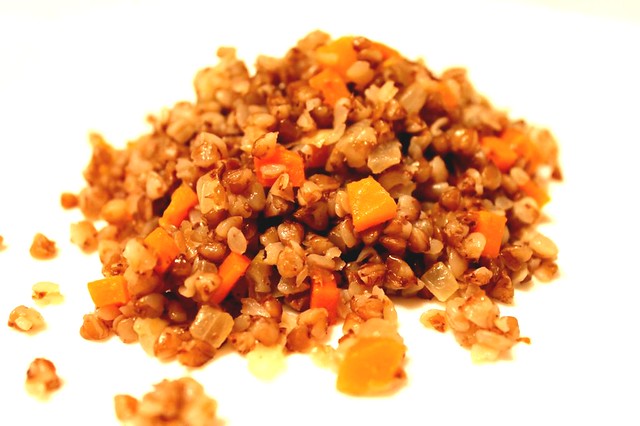
Cooking buckwheat


Buckwheat is one of my favorite grains and something I closely associate with home and Russia. It has a lot of character. When cooked properly it is absolutely delicious on its own. No adds or toppings are necessary. In this sense it is similar to rice. The right way to cook it is nothing complicated, but it really makes a difference.

Wednesday, November 30, 2011

Ukrainian granny's vareniki with mashed potatoes (vegan version)


It is hard to believe, but I made my first conscious vareniki (Ukrainian dumpling) just a couple of months ago. I pretty much grew up wondering around them being cooked at the family kitchen helping to make them here and there, but never really did the thing myself from start to the end. The tradition comes from my Ukrainian grand grandma. She cooked beautifully and she taught me a few things. The one I'm most proud of is this vareniki seal, which makes them look so pretty.

Saturday, September 24, 2011

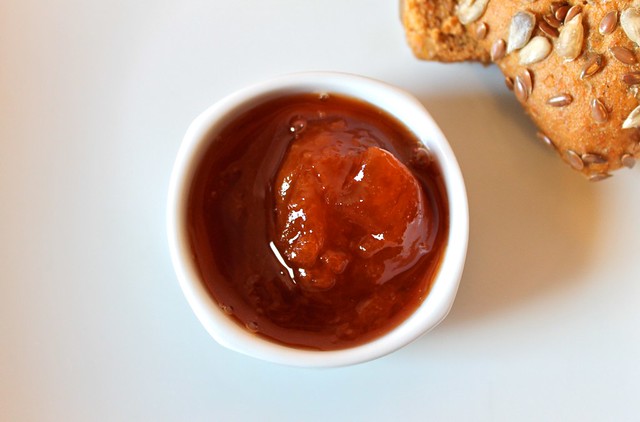
Home made apricot jam (varenie)


Apricot jam (varenie) is something we make at home every summer since I remember myself. I am a crazy apricot lover always waiting for the season to start after the long winter. However as soon as August is over apricots are gone again. The apricot jam is an attempt to keep them with me till the next summer and I must say it works. With its mind blowing aroma and deep flavor it's like little magic in a jar.

Saturday, June 25, 2011

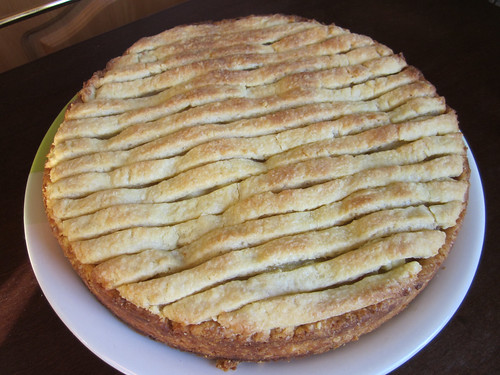
Polish style szarlotka (apple pie)


I used to think I’m not someone who easily gets provoked. However after this article in NY Times Dining made me cook I’m not that sure any more. The result was that I discovered a delicious apple pie which is very different from whatever I tried before. Given that I’m a complete apple pie freak and try different apple pastry wherever I find it, I feel impressed and simply happy about it.

Friday, February 25, 2011

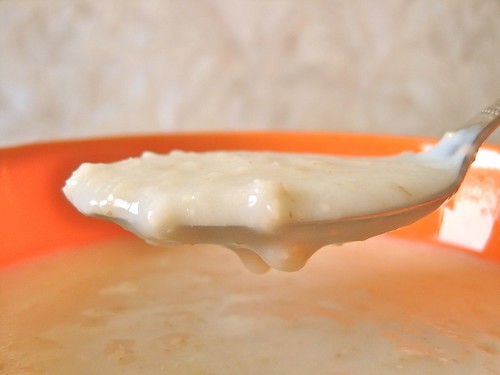
Oatmeal love and hate


I had huge doubts on whether I should write this post. The thing is that in Russia oatmeal is traditionally served for breakfast in kindergartens. Somehow they cook it in a way that serious number of adult people in Russia hate the oatmeal till the end of their life. Even the smell and look of it. So if you feel sensitive to the subject, you might want to stop right here.

Thursday, February 24, 2011

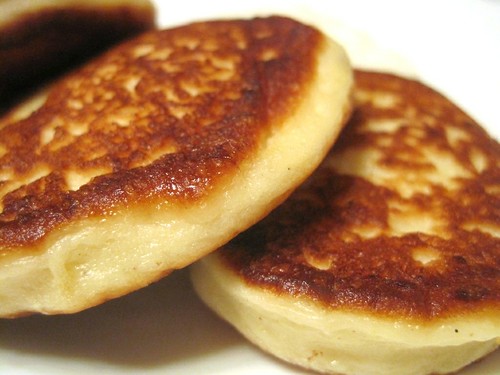
Russian syrniki (cottage cheese pancakes)


While living in France last year I noticed how different diary products are there compared to those I was used to in Russia. Especially it's true for cottage cheese which is so common and widely used in Russia and almost absent in French food stores.

Cottage cheese is used a lot in Russian cooking so it has always been part of my daily life. I love pancakes rolled up with sweetened cottage cheese inside and served with some red berry souse. Should I even talk about varenyky (Ukranian dumpling) stuffed with cottage cheese with sour cream and butter melting on top of them? Varenyky as well as some other Ukrainian dishes are also part of our family cooking as my grand grandma was a Ukrainian. She was the one why taught my mom and then me to cook.

Another thing is syrniki - cottage cheese pancakes cooked across all Eastern Europe. It's one of those dishes that I grew up with. I moved from watching how my mom makes them to helping her make them and finally to making them myself. Syrniki are a way of life food. They just have to be there from time to time.

They are simple to make and they are delicious so I'm sharing my recipe with you. I'm not pretending it's a classical one, it's just my family one. We prefer them with less flour (it makes them really tender). I also love adding lemon zest and vanilla. Both obviously do not come from traditional recipe. However with cottage cheese they make a perfect combination and the aroma gets just incredible.

Syrniki (Russian cottage cheese pancakes)

serves 4

500 gr cottage cheese
2 eggs
2 tbs sugar
pinch of salt
2-3 tbs flour
zest of 1/2 lemon
1 tea spoon vanilla sugar
vegetable oil

Combine the eggs with sugar, salt, lemon zest and vanilla sugar. Add the cottage cheese and mix well. Add the flour and mix. Start from 2 tbs. If you see the butter is too thin, add the third tbs. The final texture should be around this.

IMG_5023

In a large frying pan heat 2 tbs of vegetable oil. Set the heat to medium and scoop the butter in using a table spoon or ice-cream scooper.


Cook for a minute or 2 till the syrniki get good color from one side.


Flip them over, reduce the heat to low, put the lid on and cook for another 6-8 minutes. Take ready syrniki out and keep them warm till serving. Repeat with the rest of the butter.

Syrniki are best right out from the pan so be sure to have at least one while you're making them. I prefer them served with sour cream, but pick something you like: butter, honey, sweet condensed milk and jam seem to be the favorite compliments in Russia.

Monday, February 21, 2011

Pumpkin fritters follow up


The pumpkin porridge was gone immediately, but half the pumpkin was still in my fridge. That's how I found myself frying pumpkin fritters. There is something very relaxing about cooking fritters. I love spooning them into hot oil, watching the oil bubbling, flipping them over and watching their golden crust. It's most fun in the winter when I constantly need to warm up.

Sunday, February 20, 2011

Pumpkin porridge for Russian winter


I've done way too much French baking lately. Especially taking into account that the air temperature holds at -20C for the second week in a row and everybody needs real food. Hot, simple and nutritious. Whenever it gets so cold the same thing happens to me. Not only I start eating like crazy. I just have to have as much butter, chocolate and other greasy food as possible.

Thursday, February 10, 2011

Hot and spicy mulled wine


One of my greatest joys at cold season is mulled wine. It sounds as "Glintvein" in Russian and it's just around you in the winter. Every single Moscow restaurant and cafe has it on the menu. Cooking magazines keep publishing mulled wine recipes. I absolutely associated it with Russian food before I went skiing to Austria and then to France and bumped into their "Glühwein" and "Vin chaud".